
Beyond the Negotiation Room: What Actually Shapes Negotiation Outcomes
Negotiation outcomes are shaped far beyond the room, by politics, narratives, institutions, and how evidence is used. Influence depends on connecting these layers and linking global agreements to local realities to turn commitments into real-world impact.
by Frederike Klümper, JulietGrace Luwedde | 2026-04-09
Negotiations don’t start in the room
We often imagine international negotiations as something that happens inside a room. Delegates negotiate text, defend positions, and eventually reach agreement. But contrary to expectations, by the time negotiators sit down, much of the outcome has already been shaped by how issues are framed, what evidence is available, whose knowledge is visible, and how realities are translated into policy.
This reflection builds on a session co-developed with the Youth Negotiators Academy, where young practitioners explored a simple but critical question:
What actually shapes negotiation outcomes and where does influence really lie?
The system around negotiations
When participants were asked what influences outcomes, their answers came quickly: politics, finance, evidence, narratives, and real-world conditions. Together, these form the ecosystem around negotiations.
Negotiations do not operate in isolation. They are embedded in political interests, institutional structures, knowledge flows, and lived realities on the ground. Understanding this system is essential if we want to explain why some issues move forward and others stall.
To make sense of this, it helps to think of negotiations as operating across several interconnected layers: There is what is written: the text that is negotiated and agreed upon. But behind that sits politics: who aligns with whom, where compromises are made, and what positions are non-negotiable. These dynamics are shaped by institutions, which determine where decisions are taken and what can realistically move forward. And even when agreement is reached, the key question remains: what actually changes on the ground and how decisions translate into implementation. Underpinning all of this are narratives: how issues are framed, what is seen as urgent, and what gains political attention.
Most people only see the first layer: the final text. But it is the interaction between all of these layers that ultimately shapes outcomes.
Where knowledge loses power
A recurring insight from the discussion was that the issue is rarely a lack of evidence, but rather when and how that evidence enters the process. Evidence usually passes through multiple stages: it is generated, translated, framed, negotiated, and eventually implemented. At each step, something can be lost. Evidence may arrive too late, be too technical to use, fail to reach decision-makers, or not align with political priorities.
This is why influence is not only about producing knowledge, but about ensuring that it is timely, usable, and strategically positioned.
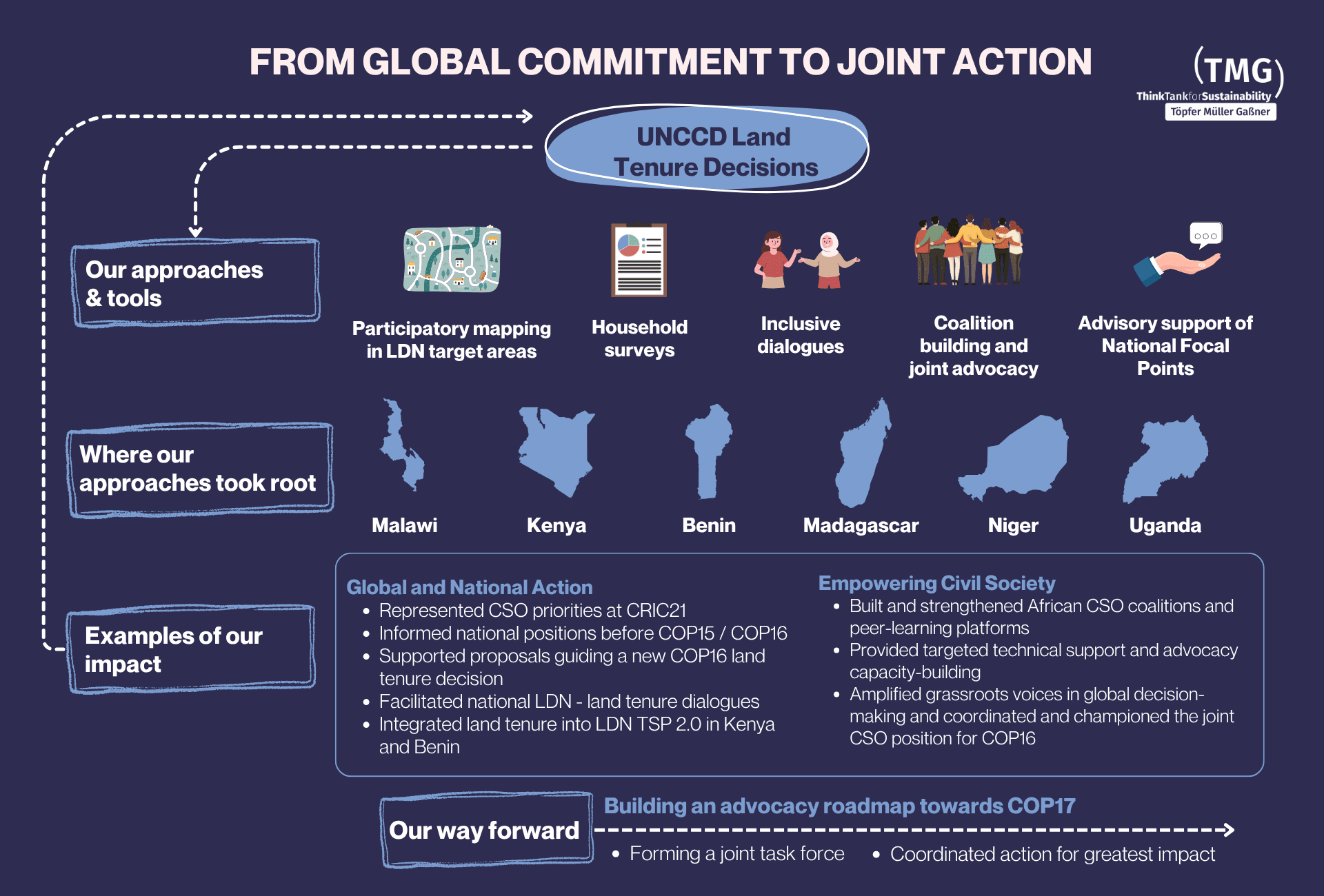
The topics of land tenure and drought offer clear examples of how this plays out in practice: At COP16 under the United Nations Convention to Combat Desertification, parties agreed to strengthen the integration of land tenure into efforts to address desertification, land degradation, and drought. Countries were encouraged to incorporate tenure into national plans, improve data, and strengthen coordination.
On paper, this represents important progress. But looking across the layers tells a more nuanced story.
The inclusion of land tenure reflects years of growing evidence and advocacy from diverse actors. At the same time, the language remains largely enabling rather than binding, reflecting political sensitivities around land governance. Institutionally, land tenure does not sit neatly within a single track, which negatively affects how consistently it is addressed. Ultimately, whether this decision leads to real change depends on national implementation, data systems, governance structures, and local realities on the ground.
A similar pattern can be observed in ongoing drought negotiations. While there is broad recognition of the increasing severity and frequency of droughts, parties remain divided on the form that a global response should take. Some advocate for a protocol that would create binding commitments and clearer accountability mechanisms, while others favor a framework approach that allows for greater flexibility and national discretion. These positions are often shaped not only by legal preferences but by concerns around capacity, sovereignty, and the implications of compliance.
At the same time, growing evidence on the economic, social, and environmental costs of drought has not yet translated into clear agreement on how implementation should be supported. Questions around predictable and accessible finance remain central, and without clarity on resources, even ambitious commitments risk remaining aspirational.
As with land tenure, this highlights a broader dynamic: outcomes are shaped not only by what is agreed, but by how political choices, institutional structures, and resource flows interact across levels.
Working across the system: a practical response
Formal negotiation processes are often organized around thematic areas such as finance, water, land and people, or food systems. These help structure discussions, but they do not fully capture what drives them and what the dynamics are, especially if they intersect multiple themes.
If negotiation dynamics are cross-cutting, responses must be as well.
The Women’s Land Rights Initiative (WLRI) offers one example of how this can be done in practice. Women’s land rights are often framed as a gender issue. In reality, they sit at the intersection of land tenure, food systems, climate resilience, and social equity. This makes them inherently cross-cutting and difficult to address within a single thematic track.
Rather than working within one space, WLRI takes a network-based approach. It connects actors across borders, links local evidence to global advocacy, and creates entry points across multiple policy processes. In doing so, it demonstrates how synergies across land, climate, and biodiversity agendas can be made operational in practice.
Influence is not only about engaging with one negotiation track, but also about connecting them.
The Youth Negotiators Academy (YNA) contributes to this space by equipping young practitioners with negotiation skills alongside a systems understanding of how influence is built and exercised. Through its programs, YNA emphasizes that effective engagement goes beyond the negotiation room, encouraging participants to work across national, regional, and global levels.
YNA participants actively engage in generating and translating knowledge, supporting national delegations, and strengthening connections between grassroots realities and global policy discussions. This includes working with local communities, contributing to policy processes, and ensuring that youth perspectives are strategically positioned within decision-making spaces. By building both technical capacity and networks, YNA helps bridge the gap between evidence, policy, and practice. In doing so, it reinforces the idea that young people are active shapers of the systems that influence negotiation processes.
At the same time, this work increasingly takes place in a context of shrinking civic space in many countries. Civil society organizations play a critical role in shaping negotiation outcomes by generating evidence, mobilizing actors at the national level, and ensuring that local realities are represented in global processes. However, their ability to operate, organize, and advocate is not always guaranteed.
This makes networks and building capacities even more important as providers of a collective voice, shared evidence, and strategic entry points into policy processes.
Beyond just coordination, strengthening networks and capacities also maintains space for participation and influence.
Conclusion
As the UNCCD process moves towards COP17, the main challenge will be navigating the cross-cutting dynamics that determine how those priorities translate into outcomes. Negotiations succeed when we connect global decisions, national systems, and local realities.
This also changes how we think about influence. It does not sit only with negotiators, but also with those who translate knowledge into policy-relevant insights, connect actors across levels, and ensure that issues like land tenure are visible and actionable.
In that sense, initiatives like the Youth Negotiators Academy are not only preparing participants to engage in negotiations. They are positioning them within the system that shapes those negotiations.
Understanding that system is the first step toward shaping it and ultimately, toward transforming how global commitments translate into real change on the ground.
 Food SystemsApr 30, 2026
Building back better this time? Responses to an unfolding food price crisis
Drawing two conclusions on our global food systems roughly two months after the closure of the Strait of Hormuz
Jes Weigelt, Violet Shivutse, Mino Ramaroson, Alexander Müller [1], TMG Research, Shibuye Community Health Workers, Huairou Commission
 Urban Food FuturesFeb 09, 2026
Pushing the horizon: Urban farming and community-led innovation in Mukuru informal settlement
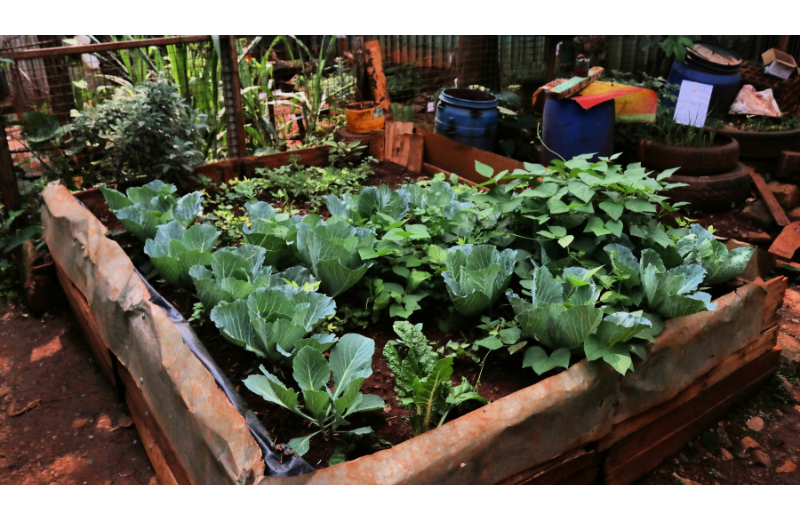
A small community-run greenhouse in Mukuru is offering insights into how controlled-environment agriculture can strengthen food security in urban environments under increasing pressure—and a look into the future of food systems in informal settlements.
Christian Sonntag, Emmanuel Atamba, Lumi Youm
 Land GovernanceDec 18, 2025
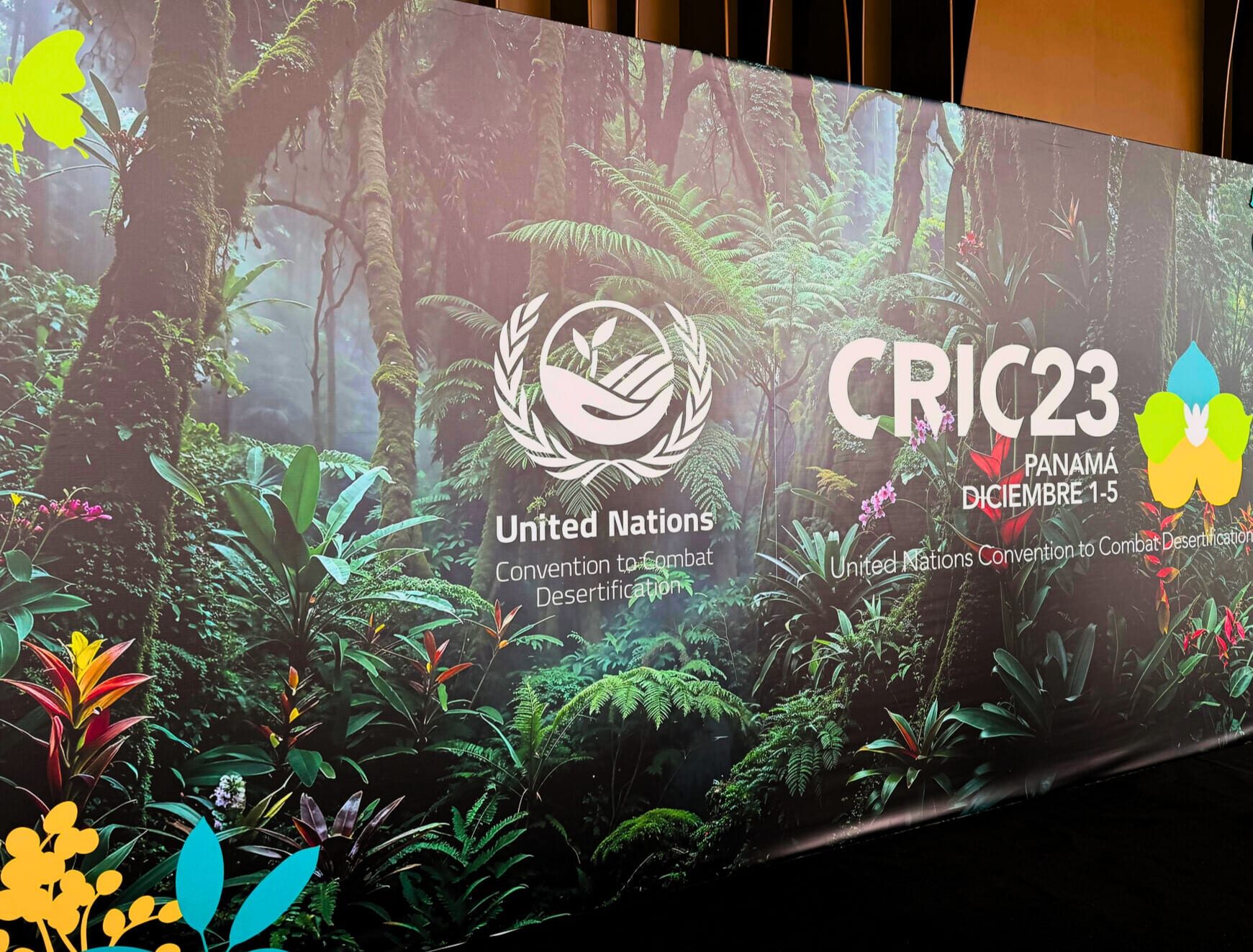
Land tenure, women’s land rights, and resilience: Reflections from CRIC23 toward UNCCD COP17
Our experts discuss what the exchanges at CRIC23 highlighted and revealed about the role of secure and gender-equitable land tenure in the UNCCD's work ahead of the 2026 triple COP year.
Frederike Klümper, Washe Kazungu
