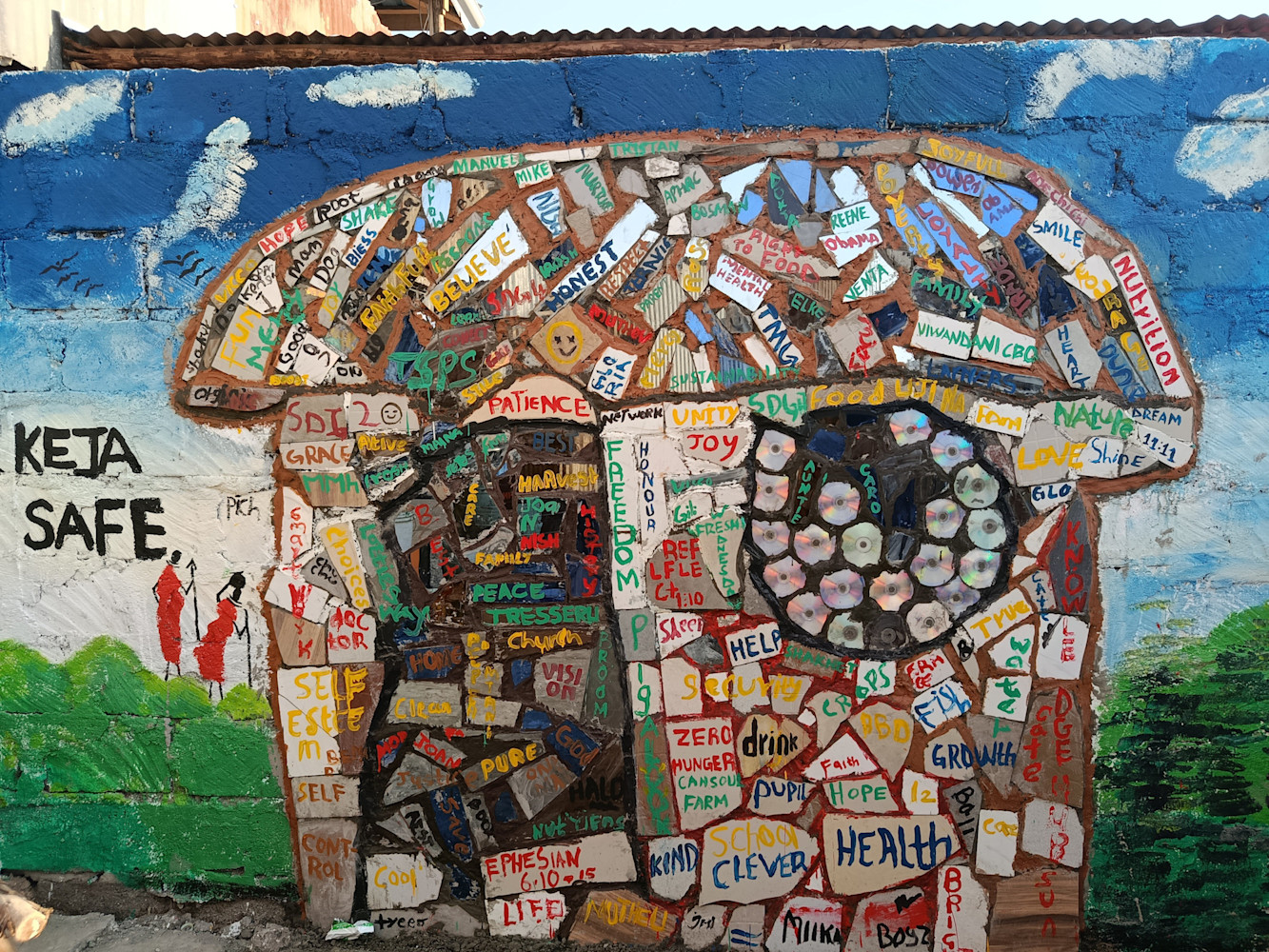
The story of Mukuru's Urban Nutrition Hub
In Mukuru informal settlement, a safe haven for women has grown into the Urban Nutrition Hub, a multi-purpose space for nutrition education, training, and community development, demonstrating the potential of grassroots community-owned innovation..
by Serah Kiragu-Wissler | 2025-12-09
In the heart of Mukuru, one of Nairobi’s largest informal settlements, a quiet transformation is underway. What began as a collaboration to improve school meals has blossomed into a vibrant gathering place for the community: the Urban Nutrition Hub, a living, breathing space where learning, nourishment, and locally-led action converge.
Building a community-led school meals model in Mukuru
In 2024, TMG Research partnered with five low-cost private and community-run schools and two Mukuru-based organizations—Viwandani Community CBO (VICCO) and the Ruben Centre—to co-develop an innovative school meals model tailored to the challenges these schools face.
Through co-creation and joint research, this initiative gave rise to a fully community-run model that could be replicated and adapted across similar contexts. Today, the programme is guided by a management committee of parents, schools, and the two partner organizations, helping to strengthen transparency, accountability, and shared ownership.
Beyond a meals programme: The co-creation of a community nutrition and learning hub
As the school meals programme evolved, a new vision began to emerge. Here was an opportunity to nurture something beyond meals—a space for learning, dialogue, and knowledge exchange on nutrition and community well-being. This idea was the beginning of the Urban Nutrition Hub, a place for ideas to be shared, skills exchanged, and new approaches co-created around food, health, and livelihoods.
But in Mukuru, where every square metre is contested, finding space for such a home was no small feat.
The breakthrough came when VICCO offered two small rooms it had long used as a safe haven for women facing domestic violence. Affectionately known in the community as the “Keja-safe” (safe house), the rooms provided crucial shelter. However, space was limited, and the structure needed improvements.
Still, they had potential. Together with VICCO, we asked: what if this same building could be redesigned and reconstructed to serve multiple purposes? What if it could help women in need and become a hub for nutrition training and community engagement?
With TMG’s financial support, reconstruction began. The ground floor was redesigned to create a cooking area for VICCO’s signature “Nutrition Saturday” sessions while maintaining its original purpose as a safe haven for women.
In addition, a new upper floor was built, adding a flexible meeting and training space along with two small offices to support VICCO’s growing administrative needs. The result was a multi-purpose community space that could nurture minds, bodies, and community.
An integrated space for nutrition, learning, community development, and more
Over time, the Hub has become a catalyst for learning and the empowerment that comes with it. Through its weekly “Nutrition Saturday” series, VICCO offers practical yet invaluable nutrition educational opportunities to the community. Deeply rooted in the realities of daily life in Mukuru, the topics for discussion range from affordable meal planning and food preparation to understanding micronutrients and combating malnutrition.
Beyond nutrition, the hub has grown into a centre for broader knowledge exchange which hosts youth trainings on artificial intelligence and women’s empowerment meetings. It also doubles as a social space where teenagers and children engage in indoor games and traditional dance, nurturing mental well-being, physical fitness, and cultural expression.
The hub’s multifunctional design allows it to serve as a training centre, a safe space, and a revenue-generating resource. Previously reliant on volunteer efforts, the organization can now generate a modest income by hiring out the meeting space and catering meals. This financial boost has contributed immensely to VICCO’s programmatic capacity and ability for self-sustenance, allowing it to expand its activities and support more community members.
Building local capacity for long-term change
Since its establishment, the Urban Nutrition Hub has elevated VICCO’s profile and strengthened its voice as an exemplary case for locally led development, attracting visitors as well as current and potential partners eager to learn from the model. In one recent instance, a potential donor visited VICCO at the hub, a meeting that might not have happened without a welcoming environment. Conversations held in the new upstairs meeting room have sparked new ideas and opened doors for future collaborations, further adding to VICCO’s capacity to scale impact.
The story of the Urban Nutrition Hub is a testament to what communities can accomplish when they take centre-stage in their own development initiatives. When formal institutions fall short, informal networks and grassroots organizations often step in, not only filling the gap but flourishing. The hub embodies the spirit of Mukuru itself: resourceful, collaborative, and unyielding in the pursuit of better lives for community members.
Its experience shows the importance of tailoring solutions, not transplanting them. Mukuru’s challenges are not the same as those in middle- or high-income areas of Nairobi. Although the hub was borne of necessity, it has now become an exemplary model of what community ownership, trust, responsiveness to local realities, and participatory design can accomplish.
Looking ahead: A vision for the future
The Urban Nutrition Hub has become a beacon for what could be possible in urban informal settlements. Its multi-purpose, community-led, and empowerment-focused model can be adapted and scaled, not just in Nairobi but in other cities facing similar challenges.
As the hub evolves, TMG and VICCO will remain committed to supporting the Mukuru community, exploring new partnerships, expanding learning exchanges, welcoming new collaborators, and deepening the impact of the hub.
The Urban Nutrition Hub represents not just a building but a blueprint for sustainable change, defined by hope, learning, and transformation. It’s a place where schools strategize to feed their pupils, where mothers learn to nourish their children, and where community members gather to shape a healthier future.
From a modest safe house to a thriving centre of nutrition and knowledge, the hub reflects the power of community-led innovation. It reminds us that even in the most challenging environments, solutions can be found—and they often begin with a shared meal and a unified vision.
 Food SystemsApr 30, 2026
Building back better this time? Responses to an unfolding food price crisis
Drawing two conclusions on our global food systems roughly two months after the closure of the Strait of Hormuz
Jes Weigelt, Violet Shivutse, Mino Ramaroson, Alexander Müller [1], TMG Research, Shibuye Community Health Workers, Huairou Commission
 Land GovernanceApr 09, 2026
Beyond the Negotiation Room: What Actually Shapes Negotiation Outcomes
Negotiation outcomes are shaped far beyond the room, by politics, narratives, institutions, and how evidence is used. Influence depends on connecting these layers and linking global agreements to local realities to turn commitments into real-world impact.
Frederike Klümper, JulietGrace Luwedde
 Urban Food FuturesFeb 09, 2026
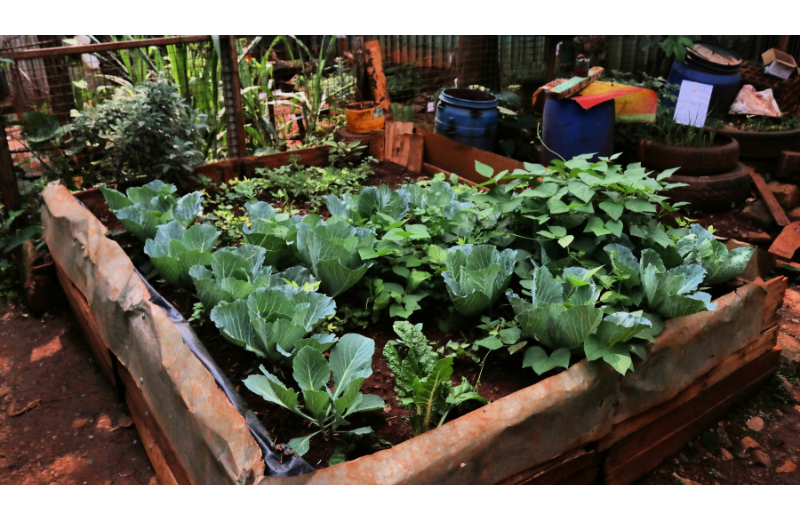
Pushing the horizon: Urban farming and community-led innovation in Mukuru informal settlement
A small community-run greenhouse in Mukuru is offering insights into how controlled-environment agriculture can strengthen food security in urban environments under increasing pressure—and a look into the future of food systems in informal settlements.
Christian Sonntag, Emmanuel Atamba, Lumi Youm
