
Land tenure, women’s land rights, and resilience: Reflections from CRIC23 toward UNCCD COP17
Our experts discuss what the exchanges at CRIC23 highlighted and revealed about the role of secure and gender-equitable land tenure in the UNCCD's work ahead of the 2026 triple COP year.
by Frederike Klümper, Washe Kazungu | 2025-12-18
Land tenure and women’s land rights are increasingly recognized as enabling conditions for resilience, land restoration, and sustainable land management under the United Nations Convention to Combat Desertification (UNCCD). As Parties look ahead to COP17 in 2026—when the Conferences of the Parties to the three Rio Conventions will take place in close succession—questions of tenure security, gender equality, and land governance are gaining renewed relevance. This is driven by growing competition over land linked to restoration targets, climate mitigation, biodiversity conservation, and emerging land-based finance mechanisms.
Discussions at the twenty-third session of the Committee for the Review of the Implementation of the Convention (CRIC23) in Panama City reinforced that land tenure is not a peripheral issue within the UNCCD. Rather, it shapes who can invest in land, benefit from restoration efforts, and access finance. At the same time, CRIC23 highlighted persistent gaps in how women’s land rights are addressed in implementation, reporting, and financing frameworks.
Why land tenure and women’s land rights matter for resilience
A Women’s Land Rights Initiative (WLRI) side event at CRIC23, including a strong intervention from Panama, highlighted how women sustain land and water systems through nurseries, seed banks, and community monitoring, often under conditions of land degradation and water stress. These discussions reinforced that women play a critical role in resilience and restoration outcomes.
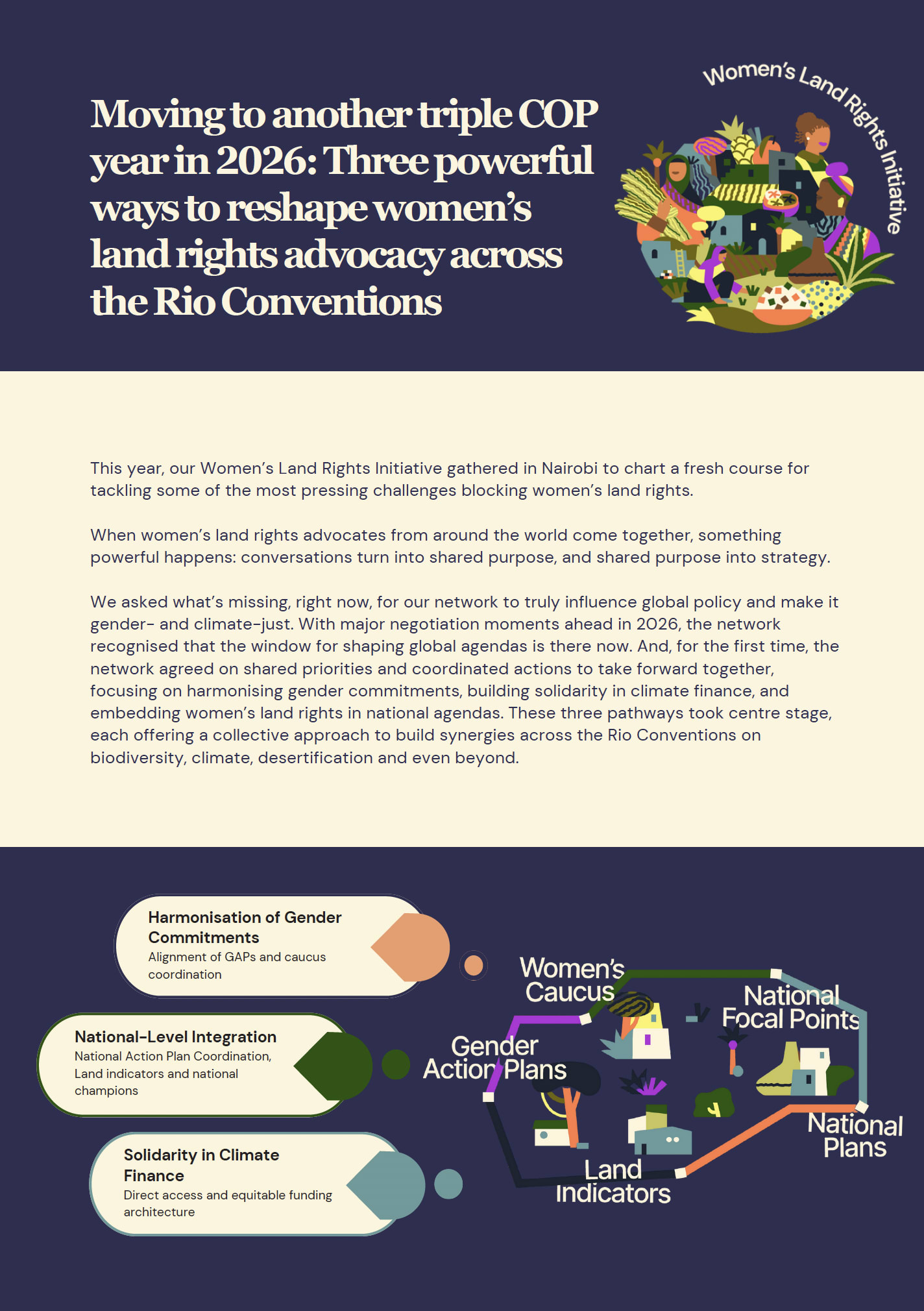
Looking ahead to the 2026 triple COP year, the WLRI is therefore focusing on both ensuring that land tenure and women’s land rights are more firmly embedded within each Convention’s processes, and improving harmonization across the Rio Conventions. This includes strengthening coherence across Gender Action Plans and Women’s and Gender Caucuses, building solidarity rather than competition in climate finance so resources reach women on the ground, and embedding women’s land rights more systematically in national plans and indicators.
Explore further
WLRI website: Ongoing work, partners, and updates
WLRI review 2025: Three priority pathways toward the 2026 triple COP year
WLRI newsletter: Updates on events, publications, and engagement opportunities. Join our mailing list!
How can land tenure and gender be integrated into UNCCD reporting?
A dedicated CRIC23 side event examined how land tenure and gender could be more systematically integrated into UNCCD reporting, particularly in light of discussions on the Future Strategic Framework. From a monitoring perspective, the discussion made clear that integration is feasible. Existing SDG indicators on tenure security and women’s land rights, alongside national statistical systems and global tenure datasets, already provide a strong foundation.
Rather than introducing new reporting burdens, participants emphasized the need for better alignment with existing SDG indicators, improved interoperability between national and global data systems, and space for participatory or complementary reporting by civil society. Several interventions noted that land tenure could already serve as a meaningful disaggregation for existing indicators, strengthening both reporting quality and policy relevance without structural changes to the framework.
Country examples from Madagascar, Botswana, and Zambia illustrated both the opportunities and institutional constraints involved, reinforcing that the key challenge is not a lack of indicators, but ensuring that tenure and gender data are actually used to inform policy and implementation.
Explore further
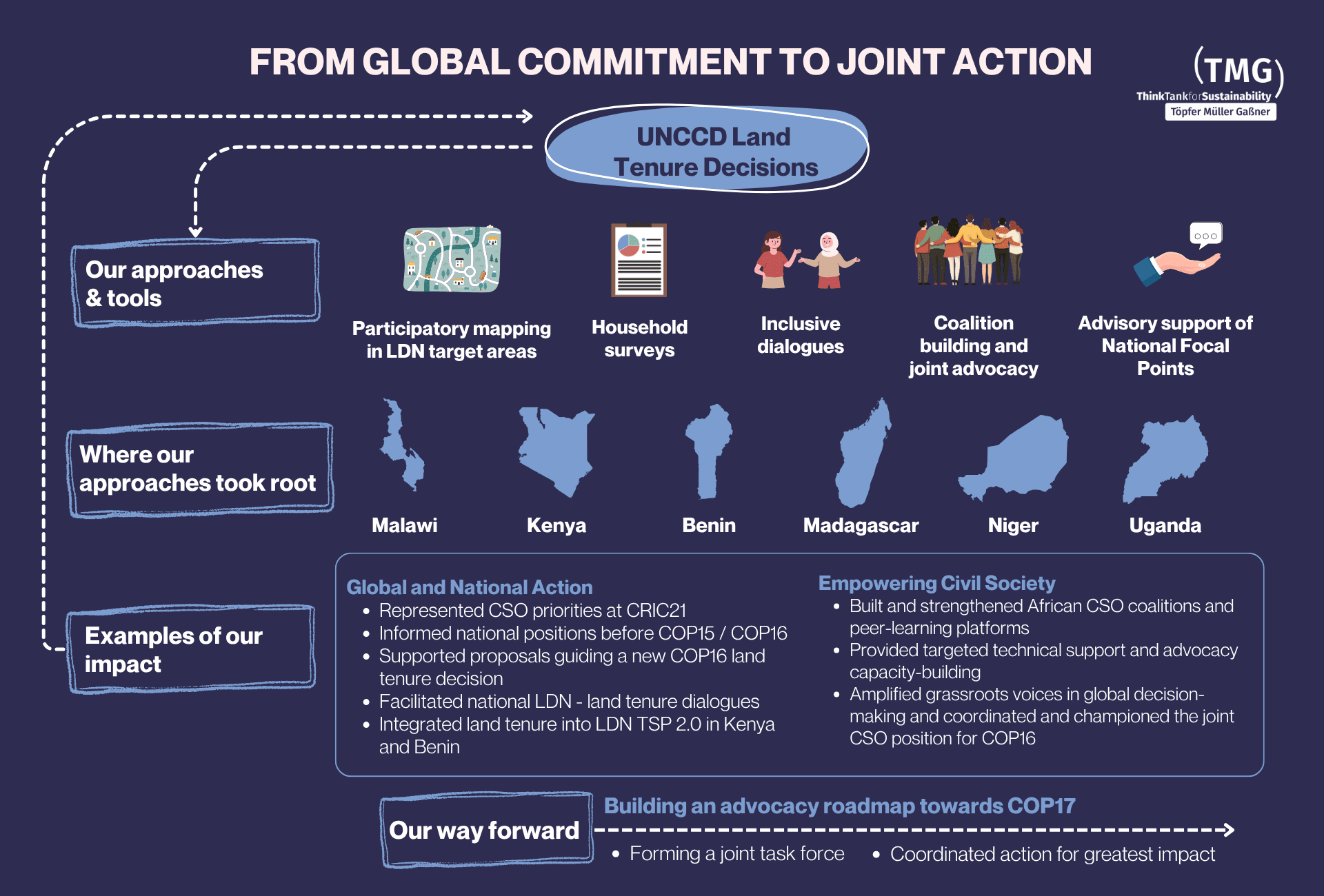
Our report analyzes the implementation of the UNCCD land tenure decision across six countries in Africa, including Benin, Kenya, Madagascar, Malawi, Niger, and Uganda.
From discussion to strategic input
The exchanges at CRIC23 directly informed a joint input note that TMG Think Tank for Sustainability, together with partners working on land tenure and women’s rights, submitted to the Intergovernmental Working Group on the Future Strategic Framework. The note argued that land tenure and gender should be treated as cross-cutting enablers within the FSF, embedded across areas such as sustainable land management, food security, resilience finance, and restoration.
Drawing on the side events and country interventions, the input note also emphasized the importance of aligning data systems, indicators, and policy processes. Rather than introducing new reporting burdens, the note calls for better use of existing SDG and national data, clearer institutional responsibilities, and stronger links between reporting and national planning cycles. The aim is to ensure that the FSF supports Parties not only in measuring progress, but in using tenure and gender data to inform decisions, investments, and implementation on the ground over the coming decade.
What stays on the radar: carbon markets and land rights
An emerging agenda that warrants close attention is the growing focus on land-friendly carbon markets, particularly as it intersects with TMG’s work on net zero pathways and land rights. Discussions at CRIC23 highlighted increasing interest in carbon projects linked to land restoration, sustainable land management, and soil carbon, alongside persistent concerns about integrity, permanence, and social safeguards.
For smallholders and land users, the implications are significant. How carbon benefits are shared, how permanence requirements are defined, and whether land tenure rights are recognized and protected will shape whether these initiatives contribute to resilience or reinforce existing inequalities. As this agenda develops, alignment with Land Degradation Neutrality targets and national land governance frameworks will be critical if carbon markets are to support restoration outcomes while safeguarding rights on the ground.
Explore further
TMG Research and the Robert Bosch Stiftung explore how the global drive for net-zero emissions is reshaping land use worldwide.
Read TMG's latest op-ed here, featured in Land and Climate Review
Looking ahead to 2026
CRIC23 offered important reference points for strengthening how land tenure and gender are reflected in the UNCCD’s work over the coming decade. As Parties move toward COP17 in 2026, a year that will again bring the three Rio Conventions together, the way these issues are treated within the Future Strategic Framework will matter well beyond the UNCCD alone. While many questions remain contested, the discussions at CRIC23 underscored that secure and gender-equitable land tenure is a critical safeguard and enabling condition for effective action to halt and reverse land degradation. We look forward to continuing this work with partners as the FSF takes form and feeds into broader Rio Convention processes in the lead-up to the 2026 triple COP year.
Interested in coordinating on land tenure toward UNCCD COP17? Register your interest here!
 Food SystemsApr 30, 2026
Building back better this time? Responses to an unfolding food price crisis
Drawing two conclusions on our global food systems roughly two months after the closure of the Strait of Hormuz
Jes Weigelt, Violet Shivutse, Mino Ramaroson, Alexander Müller [1], TMG Research, Shibuye Community Health Workers, Huairou Commission
 Land GovernanceApr 09, 2026
Beyond the Negotiation Room: What Actually Shapes Negotiation Outcomes
Negotiation outcomes are shaped far beyond the room, by politics, narratives, institutions, and how evidence is used. Influence depends on connecting these layers and linking global agreements to local realities to turn commitments into real-world impact.
Frederike Klümper, JulietGrace Luwedde
 Urban Food FuturesFeb 09, 2026
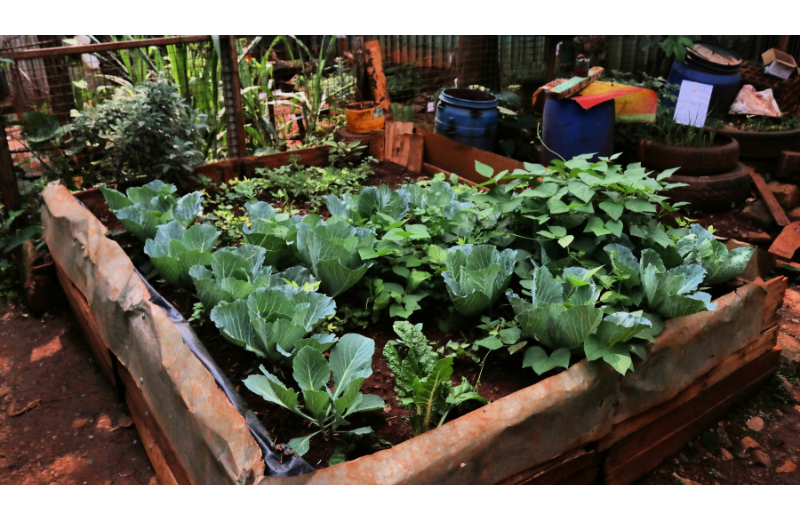
Pushing the horizon: Urban farming and community-led innovation in Mukuru informal settlement
A small community-run greenhouse in Mukuru is offering insights into how controlled-environment agriculture can strengthen food security in urban environments under increasing pressure—and a look into the future of food systems in informal settlements.
Christian Sonntag, Emmanuel Atamba, Lumi Youm
